Table of contents
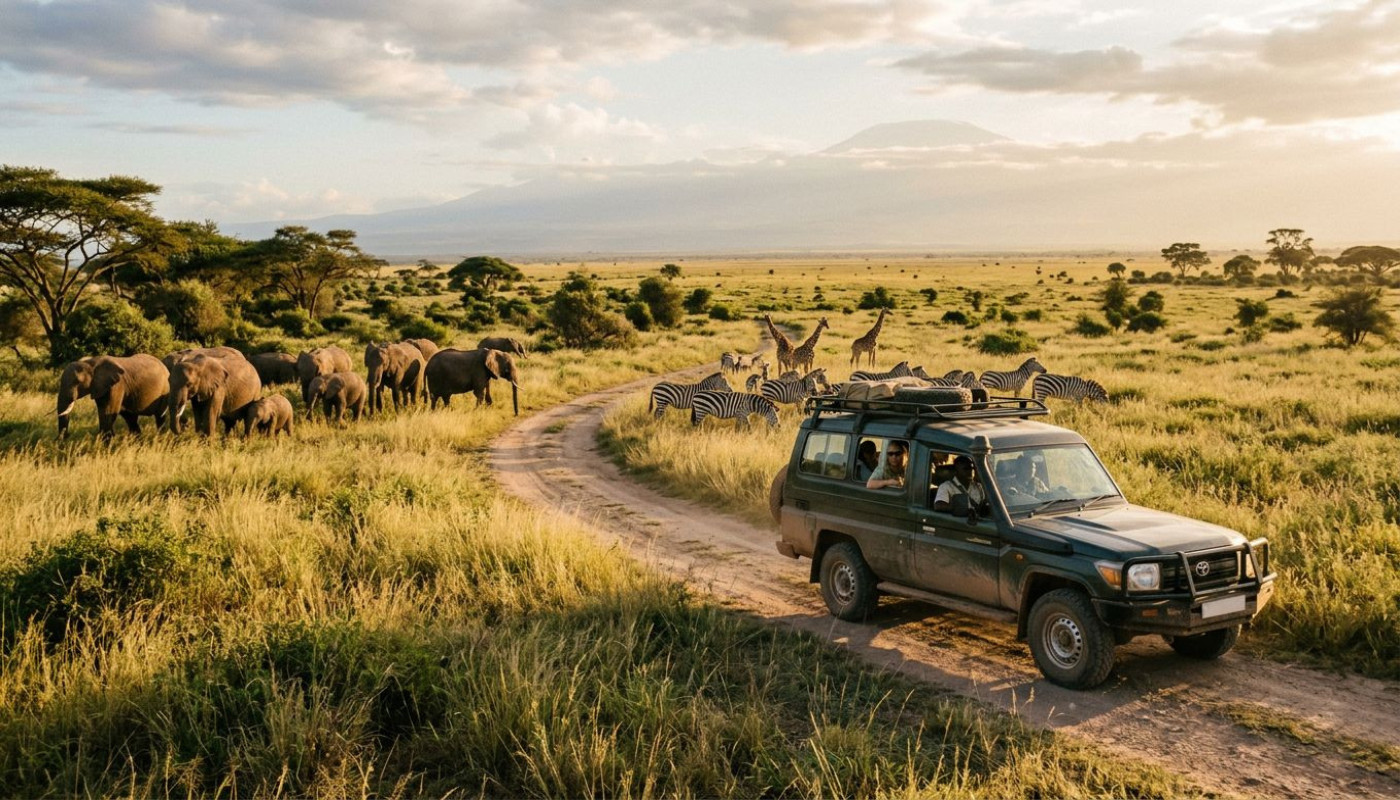
Forget the crowded game-drive convoy for a moment, and a different kind of safari starts to look surprisingly compelling. Self-drive routes, long seen as the budget alternative, are being re-evaluated by travellers chasing quieter sightings, flexible schedules and a stronger sense of place, especially as park fees rise and peak-season availability tightens. Across Southern Africa, from the Kruger fringes to lesser-known reserves, the question is becoming harder to ignore: does driving yourself deliver a more authentic wildlife encounter, or just a higher-stakes gamble?
Why the wheel can change everything
What if “authentic” is partly about agency? On a self-drive safari, the day is shaped by your decisions rather than a lodge timetable, and that shift can alter the texture of wildlife viewing in ways many first-timers do not anticipate. You leave before sunrise if you want to, you linger at a waterhole when the light turns soft, and you can backtrack when fresh tracks cut across the road, a freedom that often produces the kind of slow-burn encounters that don’t fit neatly into a two-hour drive window.
In big flagship parks, that flexibility can be meaningful because animal activity is unevenly distributed, and so is traffic. In South Africa’s Kruger National Park, for example, the road network covers roughly 3,500 kilometres, which allows visitors to spread out, yet congestion still spikes on popular arteries during school holidays and winter high season. A self-driver who starts early, chooses quieter loops and avoids the most “famous” picnic stops at peak lunch hour can, quite simply, see the same ecosystem with fewer vehicles stacked behind a guide’s radio call. The experience is not only about sightings, but about the silence between them: hornbills on the verge, dust hanging in the light and the sense of moving through a living landscape rather than a curated show.
There is also an overlooked psychological element. Research on nature-based travel repeatedly points to perceived autonomy as a driver of satisfaction, and self-drive safaris score highly on that feeling of control. The trade-off is that autonomy demands attentiveness: reading the terrain, understanding how elephants use riverbeds, noticing where impala cluster and where they do not, and learning to interpret other cars’ behaviour without blindly chasing them. For many travellers, that learning curve is precisely where the authenticity emerges, because you become an active participant in the day rather than a passenger waiting for the next stop.
The hidden math of self-drive safaris
Costs decide more trips than romance does. The perception that self-drive is “cheap” is only partly true; it can be excellent value, but it is not automatically a bargain once you add up vehicle hire, fuel, accommodation, park entry and the occasional guided activity people still book for balance. In Kruger, daily conservation fees for international visitors are widely published, and they add up quickly on a multi-day itinerary, while fuel costs are sensitive to route choices and detours, the very freedom that makes self-drive appealing.
Yet the cost structure can still tilt strongly in favour of self-drive, especially for families or groups who can split vehicle and accommodation expenses. A couple paying for two beds in a simple rest camp bungalow, cooking some meals and driving themselves can often spend less per day than a pair booking a mid-range lodge package that bundles guided drives, meals and drinks. Lodges, particularly inside private reserves bordering national parks, can deliver exceptional guiding and off-road access, but they also build in staff ratios, vehicle maintenance, and the premium of exclusivity; those fixed costs are reflected in nightly rates.
There is also a “risk budget” travellers rarely price in: the cost of mistakes. Arriving late at a gate can mean missing an afternoon drive entirely because most national parks enforce strict closing times, and a wrong turn on a long loop can turn a relaxed morning into a fuel-heavy scramble. Add the need for proper insurance, a suitable vehicle for the terrain and sometimes a second spare tyre on rougher routes, and the cheap safari can become a false economy for the unprepared. The smart middle ground is increasingly common: self-drive for most of the trip, then one or two paid guided drives for expertise, night sightings and a reset of your fieldcraft.
What you gain, what you risk
The most obvious gain is intimacy, and not only with wildlife. Self-driving forces you to confront the entire ecosystem, including the less cinematic parts: long stretches with no animals, the patterns of birds, the behaviour of insects after rain and the way landscapes change between riverine thickets and open savanna. Those “empty” kilometres are often where travellers notice how parks function beyond the Big Five checklist, and why the same species can be abundant one season and elusive the next.
The risk is that you are also your own safety officer. Large mammals can be unpredictable, and national parks repeatedly stress basic rules for a reason: stay in the vehicle except in designated areas, keep distances, do not block animals’ paths and never crowd a sighting. In self-drive contexts, the biggest hazards often come from other people’s impatience rather than from the animals themselves, because traffic jams at lions or leopards can lead to dangerous positioning, sudden reversing and vehicles edging too close for a better photo. Add fatigue, heat and long days on corrugated roads, and the self-drive safari becomes an exercise in judgement as much as enthusiasm.
Then there is the question of information. Guides bring experience, radio networks and the ability to read a landscape quickly, and that can translate into more sightings in less time, particularly of elusive species such as leopard. Self-drivers can close that gap with preparation, but it takes work: learning peak activity hours, understanding where water is available in dry months, and knowing which habitats suit which species. For travellers who want to plan routes, compare regions and get practical logistics right without turning the trip into an administrative marathon, resources such as more can help structure decisions around seasonality, distances and on-the-ground realities.
How to drive, and still see well
Want better sightings without the stress? Treat self-drive like a craft. The simplest advantage is timing: many animals are most active at dawn and late afternoon, so being at the gate when it opens, and planning to be near an exit or camp before closing, keeps you in the productive hours without forcing risky late-day sprints. In warmer months, midday heat can flatten activity, which is when a shaded rest stop, a short birding walk in a safe camp, or even a slow drive along water can be more rewarding than chasing rumours of predators.
Route design matters as much as luck. Successful self-drivers tend to pick one or two habitats per day rather than trying to “cover” the park, and they accept that turning around is not failure but strategy. Rivers and dams can be reliable for general viewing, while open plains can be excellent for scanning, yet dense thickets may hide cats even when they are close. Keep a realistic daily distance, build in pauses and watch other species: anxious baboons, alarm calls from birds, and sudden stillness in herbivore groups can all be clues that something is nearby. The goal is not to replicate a guide’s efficiency, but to develop your own observational rhythm.
Finally, pack for the long hours: binoculars matter more than a long lens, a field guide app can sharpen your attention, and a paper map remains useful when signal drops. A cooler box and enough water reduce the temptation to rush back to camp, and a basic checklist for tyre pressure, fuel and gate times prevents the avoidable mishaps that sour a day. Self-drive safaris reward calm repetition, and over a few days, travellers often find their “quiet” sightings multiply, not because they are chasing harder, but because they are seeing better.
Plan your route, then lock it in
Book popular camps early, set a realistic fuel budget and confirm gate hours for every day, because they vary by season. Where available, check for resident discounts, multi-day passes or conservation cards, and consider adding one guided drive for night viewing. A careful itinerary turns self-drive freedom into consistently strong wildlife time.
On the same subject
How To Navigate Local Cuisine Safely As A Tourist?

Exploring The Benefits Of Nature Playgrounds In Urban Settings

A Guide To The Best Neighborhood Strolls In Eastern Paris

Exploring Eco-Friendly Travel: Tips For Sustainable Tourism

Top Family-Friendly Activities In New York City For Every Season

Extreme Tourism: A Rush of Adrenaline and Culture